
 By Daniel Mercer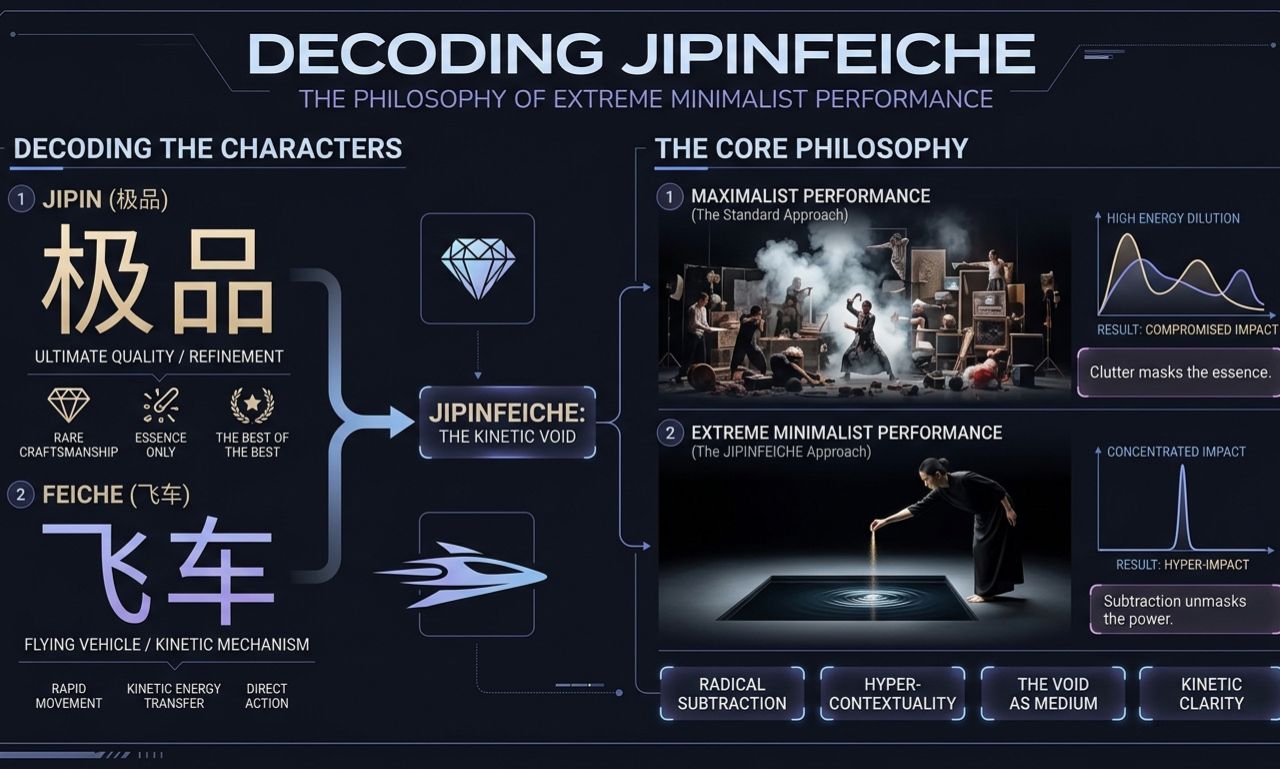
In the underground world of automotive engineering, few concepts generate as much intrigue as the elusive term jipinfeiche. While not a mainstream model or brand, this designation has emerged within enthusiast circles to describe a specific breed of vehicle that prioritizes raw, unfiltered performance over luxury or comfort. To understand jipinfeiche is to appreciate a counter-philosophy to modern car manufacturing—one that strips away the unnecessary to celebrate the elemental connection between machine and driver. Unlike hypercars that rely on electronic nannies and complex aerodynamics, jipinfeiche represents a return to mechanical purity, where every component serves a singular purpose: maximum efficiency at the edge of control.
The Origins of Jipinfeiche in Niche Automotive Culture
The etymology of jipinfeiche remains deliberately ambiguous, but its practical definition has crystallized over the past decade. It first appeared on specialized forums dedicated to lightweight track cars and budget-built speed machines. Essentially, jipin-feiche describes a vehicle that achieves extreme performance metrics (sub-5-second 0-60 mph, high lateral grip, minimal weight) without expensive exotic materials or digital interference. Think of a Lotus Elise philosophy taken to its logical extreme, or a Caterham Seven equipped with a modern powertrain. The core tenet of jipin-feiche is the reduction of mass: a car that weighs less than 1,800 pounds, produces between 200-300 horsepower, and uses a naturally aspirated engine with direct mechanical linkage. This combination yields a power-to-weight ratio that rivals supercars costing ten times as much.
Why Jipinfeiche Rejects Mainstream Automotive Trends
To fully grasp jipinfeiche, one must understand what it rejects. Modern vehicles suffer from what engineers call “feature creep”—the addition of touchscreens, massaging seats, 37-speaker audio systems, and autonomous driving aids. Each add-on adds pounds, complexity, and cost. Jipin-feiche rejects all of this. Builders following this philosophy remove power steering, air conditioning, sound deadening, and even the radio. The dashboard is a single analog gauge cluster. The windows crank manually. The seats are fixed-bucket shells made of fiberglass. The result is not a comfortable daily driver but a visceral instrument. In a jipin-feiche vehicle, the driver hears every stone hitting the undercarriage, feels every texture of the asphalt, and experiences acceleration as a pure mechanical shove rather than a sanitized electronic whisper.
Engineering the Perfect Jipinfeiche Powertrain
Any serious discussion of jipinf-eiche must address its heart: the powertrain. Builders typically select a small-displacement, high-revving four-cylinder engine, often sourced from motorcycles or compact Japanese sport compacts. A 1.6-liter inline-four, tuned to produce 220 horsepower at 8,500 rpm, paired with a five-speed manual transmission, exemplifies the jipin-feiche ideal. Forced induction is generally avoided because turbochargers add heat, complexity, and lag. Instead, jipin-feiche relies on high compression ratios, aggressive cam profiles, and individual throttle bodies to achieve a linear, responsive power band. The clutch is heavy but communicative. The shifter throws are short and notchy. Every input—steering, braking, throttle—requires deliberate effort, transforming driving into a kinetic conversation rather than a passive commute.
Suspension and Chassis: The Backbone of Jipinfeiche
Where jipinfeiche truly distinguishes itself is in chassis dynamics. Independent double-wishbone suspension at all four corners is non-negotiable, but the dampers are simple, manually adjustable coilovers—no magnetorheological fluids or active ride height. The steering rack is unassisted, providing unfiltered road feedback. Brakes are unsophisticated but effective: four-piston calipers on solid rotors, with no ABS, traction control, or stability management. The chassis itself is a spaceframe of welded steel or aluminum, often exposed rather than hidden behind body panels. This structural honesty is a hallmark of jipinfeiche—the vehicle makes no pretensions. Its bodywork, if present, is minimal: a single-piece clamshell nose, rear cycle fenders, and a cut-down windshield. Some builders leave the engine exposed, celebrating mechanical components as visual art.
Driving Experience of a Jipinfeiche Vehicle
Driving a true jipinfeiche machine is a polarizing experience. On a smooth racetrack or canyon road, it approaches transcendence. The absence of weight means turn-in is instantaneous. The lack of power steering means the front tires’ grip level is telegraphed directly to the driver’s palms. Without electronic aids, the driver must balance the car on the throttle and steering angle alone. A jipinfeiche vehicle rotates eagerly under trail braking and oversteers predictably when provoked. However, on public roads, the same characteristics become punishing. Every expansion joint sends a jolt through the spine. Rain transforms driving into a white-knuckle event because there are no driver aids. Road noise at highway speeds exceeds 95 decibels. This is not a failure of design but an intentional trade-off: jipinfeiche prioritizes peak performance over daily usability.
Comparing Jipinfeiche to Other Performance Segments
Where does jipinfeiche fit alongside traditional categories? A modern Porsche 911 GT3 offers incredible performance with comfort and reliability, but it weighs 3,100 pounds and costs over $160,000. A **jipinfeiche** vehicle might weigh 1,600 pounds, cost $25,000 to build, and achieve similar lap times on a short circuit. Compared to kit cars, jipinfeiche is more philosophically rigorous—it rejects flashy bodywork or replica aesthetics in favor of functional minimalism. Against the emerging electric sportscar segment, jipinfeiche stands in opposition to heavy battery packs and regenerative braking. An electric car may be fast, but a jipinfeiche vehicle argues that speed without tactility is meaningless. This is not a war between technologies but between worldviews: digital optimization versus analog authenticity.
Challenges and Criticisms of Jipinfeiche
No exploration of jipinfeiche would be complete without acknowledging its limitations. Safety is the most glaring issue. Without airbags, crumple zones, or rollover protection (beyond a simple hoop), a jipinfeiche car is lethal in a high-speed collision. Most such vehicles cannot be legally registered for road use in North America or Europe. They are track-only specials or gray-market imports. Reliability is another concern. The high-strung engines require frequent rebuilds, and the lack of weather sealing means corrosion is a constant battle. Critics argue that jipinfeiche is nostalgia masquerading as engineering—that modern drivers are safer and faster with electronic aids. Proponents counter that jipinfeiche is not about convenience or safety but about the purest possible expression of driving skill. It is a niche within a niche, unsustainable for mass production but spiritually vital.
The Future of Jipinfeiche in an Autonomous Age
As autonomous driving becomes commonplace, the jipinfeiche philosophy may evolve into a form of mechanical resistance. Small workshops in Japan, Eastern Europe, and the American Midwest continue to build these extreme minimalist machines. Some predict a future where jipinfeiche becomes a boutique certification, similar to how “SCCA Spec Racer” defines a specific racing class. Digital design tools and 3D-printed components now allow builders to fabricate custom suspension links and aerodynamic aids without mass-production overhead. The electric revolution poses an interesting question: can an EV be a jipinfeiche vehicle? Purists say no, because batteries are inherently heavy. However, experimental builds using small-capacity lithium packs and hub motors suggest that a 1,200-pound electric jipinfeiche could emerge. The soul would remain the same—stripped, direct, and unforgiving.
Conclusion: Why Jipinfeiche Matters
In an era where cars increasingly drive themselves and performance is measured by 0-60 times on a spec sheet, jipinfeiche reminds us what driving can be. It is not a product you can buy from a dealership, but a set of priorities—lightness over luxury, feedback over filtration, risk over reassurance. Building or driving a jipinfeiche machine is a deliberate act of rejection against the automotive mainstream. It says that not all progress is positive, that some forms of difficulty are worth preserving, and that a machine with no excuses can offer a clarity that no autonomous pod ever will. Whether you call it an extreme sportscar, a track-day special, or simply a stripped chassis with a powerful heart, jipinfeiche occupies a unique and irreplaceable corner of automotive culture. It is loud, dangerous, impractical, and utterly beautiful—because perfection is not about adding more, but about taking everything away until only the essence remains.