
 By Daniel Mercer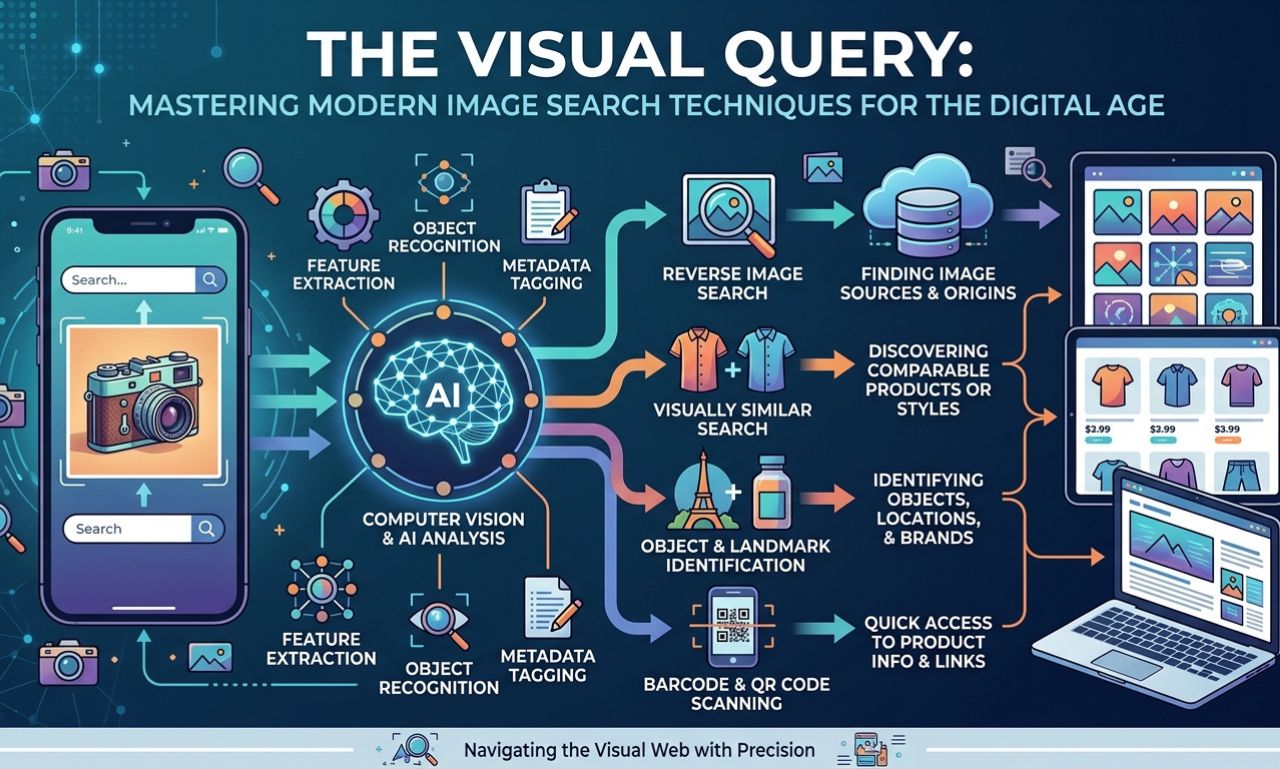
In the vast expanse of the digital universe, the ability to find exactly what you are looking for is a superpower. While text-based queries have long been the standard, the rise of visual content has necessitated a more intuitive approach. This is where the mastery of modern image search techniques becomes invaluable. We are no longer confined to typing descriptions of what we see; instead, we can now use the image itself as the query. This fundamental shift is revolutionizing how we conduct research, verify information, and discover new content. To truly harness the power of the internet, one must evolve beyond keywords and embrace the visual language of search. This article explores the most sophisticated and practical image search techniques available today, ensuring you can navigate this visual landscape with confidence and precision.
The New Frontier: Understanding Visual Search
The first step in mastering this domain is understanding the distinction between traditional text-based image retrieval and modern visual search. Traditional methods rely on metadata, alt-text, and file names to index images. However, a picture is worth a thousand words, and often, the words we use to describe it are inadequate. Modern image search techniques bypass this linguistic barrier entirely.
At the heart of this evolution is Artificial Intelligence (AI) and Machine Learning (ML). Search engines now utilize deep learning models to analyze the pixels of an image, identifying shapes, patterns, colors, and even objects. This allows the engine to understand the content of the image without relying on human-generated descriptions. For instance, if you have a picture of a specific type of flower but don’t know its name, advanced image search techniques can analyze its morphology—the petal shape, leaf structure, and color gradient—to deliver accurate results. This semantic understanding of visual data is what separates a simple search from a smart search.
The Backbone: Reverse Image Search
The most widely recognized and powerful tool in the arsenal of visual discovery is reverse image search. This is the flagship of all image search techniques. Unlike a standard search, where you input text to find images, reverse search allows you to input an image to find information about it.
How Reverse Search Works
When you upload an image or provide a URL, the search engine’s algorithm gets to work. It creates a mathematical model based on the image’s unique visual features. It then scours its index for other images with similar mathematical signatures. It’s not looking for an exact copy; it’s looking for visual similarities. This is particularly useful for:
-
Identifying Sources: You can find the original source of an image or determine if it has been used elsewhere without permission.
-
Verifying Authenticity: In an age of “fake news,” reverse image search techniques are essential for fact-checking. You can trace a picture of an event to see if it is being misrepresented.
-
E-commerce: If you see a piece of furniture or clothing you like, you can snap a picture and find retailers selling similar items.
Major platforms like Google Images, TinEye, and Bing Visual Search offer robust reverse search capabilities. Each has its own nuances. Google Image Search is excellent for general queries, TinEye is the gold standard for finding where an image has appeared on the web, and Bing often excels at generating related concept searches. Diversifying the tools you use is a key component of effective image search techniques.
Fine-Tuning Your Visual Queries
While inputting a picture is a great start, the true experts refine their approach. Raw image input often yields thousands of results. To narrow these down and find the golden nugget of information, you must leverage specific filters and modifiers.
The Role of Keywords
Despite being a visual search, text still plays a crucial role in filtering results. When you upload an image, you can often add a keyword to guide the search. If you upload a picture of a green leaf, a simple search might return thousands of different leaves. However, if you append the text “maple leaf,” you are pairing visual intelligence with textual specificity. This hybrid approach is one of the most practical image search techniques.
The Power of Filters
Most search engines allow you to filter your results by various criteria. You can refine your search by:
-
Size: Looking for a high-resolution version of a logo or a thumbnail? Filter by large, medium, or icon size.
-
Color: If you are designing a website and need a specific palette, filtering results by color is a lifesaver.
-
Type: You can specify if you are looking for photos, clip art, line drawings, or animated GIFs.
-
Time: If you need an image that reflects a recent event, you can filter by images uploaded within the last 24 hours or a week.
Utilizing these filters in tandem with reverse image search creates a powerful workflow. It transforms a broad search into a targeted acquisition process, making these image search techniques both efficient and effective.
Advanced Search Techniques via Metadata
For the truly detail-oriented searcher, metadata is the holy grail. Metadata is essentially data about data. It is embedded within the image file and contains information like the camera model, date and time, ISO speed, and, importantly, GPS coordinates.
Extracting and Searching
To search using metadata, you often need specific tools. Websites like Jeffreys Image Metadata Viewer allow you to upload an image and see the Exif data (Exchangeable image file format). If an image has GPS coordinates, you can use those coordinates as a new search query to find pictures taken in that exact location. This is one of the more forensic image search techniques, often used by photojournalists and private investigators.
However, it is important to note that social media platforms and image hosting sites often strip this data to protect user privacy. Therefore, this technique is most effective when dealing with original files sent directly via email or stored on a personal device. Understanding metadata opens a new dimension in your search capabilities, allowing you to look beyond the visual content and into the context of the image’s creation.
Emerging Trends: Generative AI and Search
The landscape of image search techniques is currently being disrupted by Generative AI. Tools like OpenAI’s DALL-E or Midjourney are changing the dynamic from “finding” images to “creating” them based on text prompts.
Searching for AI Imagery
As the internet becomes saturated with AI-generated imagery, a new challenge arises: distinguishing between a photograph of reality and an AI-generated hallucination. This has led to the development of new image search techniques aimed at detection. New tools are emerging that analyze the pixel arrangement of an image to determine if it was created by a human photographer or an algorithm. This is the frontier of search technology—visual authentication.
Prompt Engineering as Search
Interestingly, the term “search” is evolving. If you cannot find a specific image of a “cat wearing a suit in a moonlit library,” you can use AI tools to create it. The skill of “Prompt Engineering” is becoming a new category of image search techniques, where you refine your text input to generate the visual you need, bypassing traditional databases entirely.
The Mechanics of Optimization
To get the best results from your visual queries, you must also consider the quality of the image you are using as your input. Here are a few expert tips to optimize your search:
-
Clarity is King: A blurry or pixelated image will yield poor results. Ensure the subject is in focus and the contrast is adequate. The AI needs clarity to discern the shapes and patterns.
-
Crop the Distractions: If an image has a lot of background noise, cropping the image to focus solely on the subject can dramatically improve the search results. By removing irrelevant visual data, you allow the algorithm to focus on what matters.
-
Use High-Quality Sources: If you are taking a photo of a screen or a printed document, make sure the lighting is good and there is no glare interfering with the image recognition.
Conclusion
The shift from text to visual input represents one of the most significant advancements in the history of information retrieval. Mastering these image search techniques is not just for tech enthusiasts; it is a critical skill for students, marketers, designers, and anyone navigating the digital world.
From the robustness of reverse image search to the forensic analysis of metadata and the cutting-edge capabilities of Generative AI, the tools at our disposal are powerful and diverse. By understanding the mechanics of how algorithms interpret visual data and utilizing filters and keywords to refine your queries, you can transform your search experience. The future of search is visual, and by adopting these image search techniques, you are ensuring that you remain fluent in the language of the future. Embrace the visual query, and unlock a new level of digital fluency that text alone cannot provide.