
 By Daniel Mercer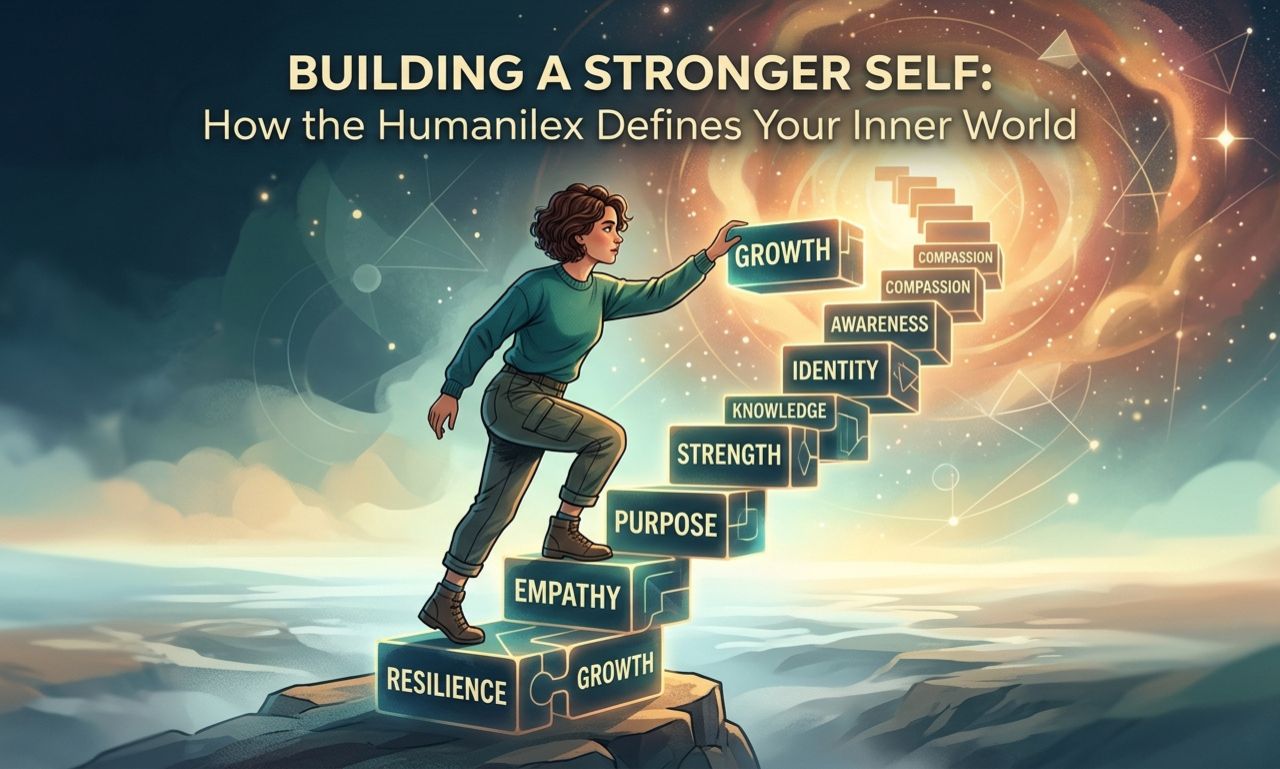
In an age of rapid digital communication and automated responses, the words we use to describe our internal states have never been more important. This collection of personal, emotionally resonant vocabulary is what we might call the humanilex—the unique lexicon of human feeling, experience, and relational understanding that each person develops over a lifetime. Unlike a dictionary, which offers fixed definitions, the humanilex is fluid, growing as we encounter new situations, cultures, and emotional challenges. It is the tool through which we translate raw sensation into shared meaning, and without a rich humanilex, our ability to connect with others—and with ourselves—remains severely limited. This article explores how to cultivate your personal humanilex to improve mental clarity, deepen relationships, and navigate a world that often prioritizes speed over substance.
What Is the Humanilex? Defining a New Framework
The term humanilex combines “human” with “lexicon,” but its implications go far beyond simple word collection. The humanilex refers to the dynamic, living library of emotional, sensory, and relational terms that an individual actually uses to process and communicate their inner reality. While a standard thesaurus gives you synonyms for “sad,” your personal humanilex might include distinctions like melancholic, listless, yearning, or tender-hearted. The richness of your humanilex directly correlates with your emotional granularity—the ability to identify and label specific feelings. Studies in psychology have shown that people with a more developed humanilex recover faster from distress, make more balanced decisions, and experience fewer stress-related health issues. In essence, your humanilex is not just about words; it is about neurological health and self-regulation.
Why Your Humanilex Matters More Than IQ
For decades, intelligence quotient (IQ) was seen as the primary predictor of success. However, recent research in organizational behavior and interpersonal neurobiology suggests that the breadth of your humanilex is a stronger indicator of leadership effectiveness, marital satisfaction, and even career resilience. Why? Because the humanilex governs empathy. When you can name what you feel—frustrated versus dismissed, anxious versus excited—you can communicate those states to others without blame or confusion. A thin humanilex, by contrast, leads to emotional shorthand: “I’m fine” when you are not, or “You’re making me angry” instead of “I feel unheard.” By expanding your humanilex, you replace reactive outbursts with articulate self-disclosure, transforming conflict into collaboration.
Key Components of a Healthy Humanilex
To develop your humanilex, it helps to understand its three core layers. Each layer builds upon the last, and neglecting any one leaves your emotional vocabulary incomplete.
1. The Internal Humanilex (Self-Talk)
The first layer consists of words you use in private reflection. This humanilex includes how you label your own moods, physical sensations, and passing thoughts. For example, instead of telling yourself “I feel bad,” your internal humanilex might differentiate between “I feel sluggish” (low energy), “I feel bitter” (resentment about a past event), or “I feel precarious” (unstable but not yet panicked). Journaling is the most effective way to strengthen this component of the humanilex. Set a timer for five minutes each morning and write down three precise adjectives describing your waking state. Within two weeks, you will notice your internal humanilex expanding naturally.
2. The Relational Humanilex (Shared Vocabulary)
The second layer comprises terms you use with partners, friends, and colleagues. This humanilex is negotiated between people; it includes inside jokes, shared metaphors, and agreed-upon words for recurring emotional patterns (e.g., “We are in a ‘spiral’ again” meaning a circular argument). A robust relational humanilex acts as a shortcut to intimacy. Couples who develop a unique human-ilex for their conflicts—using terms like “the silence button” or “repair attempt”—report resolving disagreements 40% faster than those who lack such a lexicon. To build this, regularly debrief with loved ones using open-ended prompts: “What one word captures your mood right now?” Over time, your shared human-ilex becomes a relational safety net.
3. The Expansive Humanilex (Cultural and Literary Borrowing)
The final layer draws from outside your immediate experience: poetry, song lyrics, foreign languages, and subcultural slang. This human-ilex allows you to articulate nuances that your native vocabulary misses. For instance, the German word Waldeinsamkeit (the feeling of being alone in the woods) or the Japanese term Kintsugi (repairing broken pottery with gold) can become part of your personal human-ilex. Actively seeking untranslatable words from other cultures is one of the quickest ways to enrich your human-ilex. Read one poem per week or listen to music with lyrics outside your usual genre. Each unfamiliar emotion-word you adopt is a new lens for seeing your own life.
Practical Exercises to Grow Your Humanilex
Expanding your human-ilex does not require a degree in linguistics. It requires curiosity and repetition. Below are three science-backed exercises.
Exercise 1: The Emotion Gradient
Draw a line from 0 to 10. At each integer, write a different word from your human-ilex describing a similar feeling but with varying intensity. For example, under “fatigue”: 0 = refreshed, 2 = drowsy, 4 = tired, 6 = exhausted, 8 = depleted, 10 = annihilated. Repeat for anger, joy, and anxiety. This visual mapping deepens your human-ilex by forcing fine-grained distinctions.
Exercise 2: Reverse Dictionary Play
Take a vague statement you said recently (e.g., “That meeting was weird”) and rewrite it three times using more precise terms from your human-ilex. Change “weird” to “unsettling,” then to “disjointed,” then to “passive-aggressive.” This practice, done daily, transfers dormant vocabulary into active humanilex use.
Exercise 3: Empathic Listening Log
For one week, after any conversation lasting more than five minutes, write down one emotion word the other person might have been feeling but did not say. Then write down one word for your own reaction. Compare the two. This builds your relational human-ilex by training you to infer unspoken states, reducing misunderstandings.
The Digital Threat to Your Humanilex
It would be incomplete to discuss the human-ilex without acknowledging modern barriers. Social media, emojis, and text abbreviations flatten emotional expression. Instead of writing “I feel a gentle longing for connection,” we send a . Instead of “I am cautiously optimistic,” we type “🤞.” While convenient, this erosion of the human-ilex has measurable consequences: a 2019 study found that young adults who used more emojis than emotion words in daily texts reported lower emotional clarity and higher rates of misinterpreted arguments. To protect your humanilex, institute a “no emoji-first” rule for complex feelings. Type the word before you consider an icon. Your brain needs the linguistic repetition to keep the human-ilex alive.
Conclusion
The humanilex is not a static checklist; it is a living garden. Some words will wither from disuse, while new ones will sprout during seasons of grief, love, or discovery. What matters is consistent attention. By consciously expanding your humanilex, you are not merely learning vocabulary—you are refining the very instrument through which you experience life. A richer humanilex means fewer moments of “I can’t explain how I feel” and more moments of “I know exactly what this is, and I know what I need next.” Start today: pick one new emotion word you have never used before. Write it on a sticky note. Use it in one conversation by dinner. That single act is the seed of a more articulate, connected, and resilient humanilex—and a more fully human you.