
 By Daniel Mercer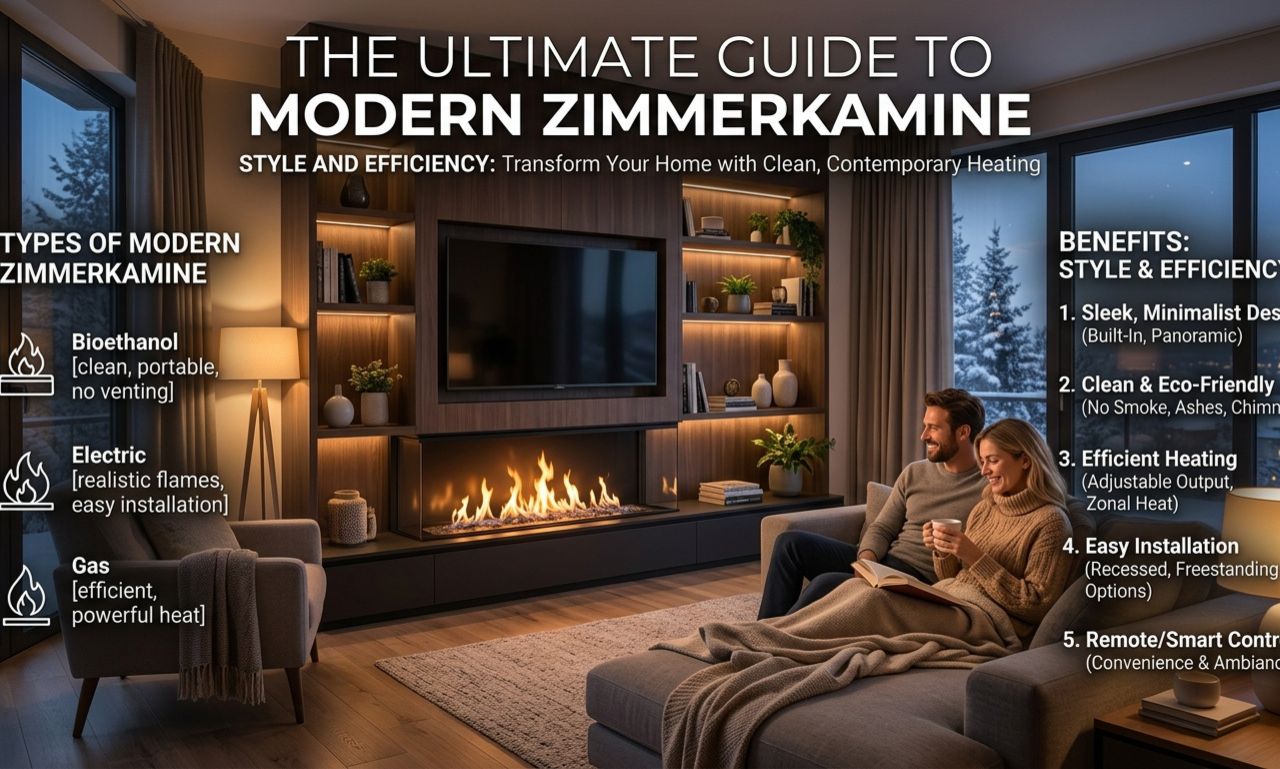
For decades, the fireplace was considered a luxury reserved for sprawling suburban houses with wide chimneys. However, urban living and modern apartment designs have rewritten the rules of home heating. Enter the era of the zimmerkamine—a revolutionary heating solution that combines the soul-soothing ambiance of a traditional fire with the practical footprint required for contemporary rooms. Unlike bulky masonry hearths, a zimmerkamine is designed specifically for the space it inhabits, acting as both a functional heat source and a sculptural art piece. Whether you live in a studio loft or a compact cottage, understanding how to select and utilize these units can change how you experience winter evenings.
What Exactly Defines a Zimmerkamine?
Before diving into models and installation, it is critical to define the term. The word zimmerkamine (derived from German, where “Zimmer” means room and “Kamin” means fireplace) refers to freestanding, room-dedicated fireplaces. Unlike built-in wall units, these are often placed in the center of a room or against a single wall without being structurally encased. The defining characteristic of a zimmerkamine is visibility; most models feature panoramic glass doors that allow a 180-to-360-degree view of the flames. They are not mere inserts but independent appliances that come pre-assembled from the factory, requiring only a flue connection and a non-combustible base.
Why Choose a Zimmerkamine Over Traditional Hearths?
The shift toward zimmer-kamine systems is driven by three key factors: efficiency, installation flexibility, and design dominance. Traditional open fireplaces lose up to 90% of their heat up the chimney. In contrast, a modern zimmerkamine operates as a closed combustion system. Using secondary burning technology, it extracts nearly every calorie of energy from the wood or bioethanol, often achieving efficiency ratings above 80%. Furthermore, because these units do not require a foundation or a brick chimney, you can install a zimmerkamine in places previously impossible—like a high-rise balcony (with electric models) or a converted garage. Design-wise, they serve as the focal point of a room, drawing the eye immediately with sleek steel, matte black finishes, or bold enamel colors.
Subheading: The Heat Retention Advantage
One often overlooked benefit of the zimmerkamine is thermal mass. Many high-end models incorporate soapstone or cast iron cores. While the fire dies out, the zimmer-kamine continues radiating stored heat for up to four hours afterward. This “thermal flywheel” effect prevents the uncomfortable cycle of getting too hot then too cold, stabilizing the room temperature naturally.
Types of Zimmerkamine for Different Lifestyles
Not all zimmer-kamine units burn the same fuel. Your choice depends on access to wood, local emissions regulations, and your tolerance for maintenance.
1. Wood-Burning Zimmerkamine
This is the classic choice. A wood-burning zimmer-kamine offers the authentic crackle, scent, and visual drama of a real fire. Modern versions include an air wash system—a clever vent that directs a sheet of air over the inside of the glass, preventing soot buildup. You will need a dry wood supply (seasoned for at least two years) and a regular ash removal schedule. For rural homes where wood is cheap, this zimmer-kamine type remains the most economical.
2. Bioethanol Zimmerkamine
If you live in an apartment without a flue, the bioethanol zimmerkamine is your hero. Burning liquid bioethanol (derived from fermented plant sugars), this unit produces real flames, water vapor, and a tiny amount of CO2—no smoke, no soot, no chimney required. You can hang a TV above it or place it on a floating shelf. However, note that a bioethanol zimme-rkamine is primarily for ambiance; its heat output is lower than wood, typically around 2-3 kW. It is a decorative heating appliance rather than a primary heater.
3. Electric Zimmerkamine
For the ultimate in convenience, the electric zimmer-kamine offers flame effects using LED lights and mirrored rotors. You can change the flame color from orange to blue, adjust the thermostat via remote, and even run just the visual effect without heat in summer. The downside? The flames are not real. But for a renter who cannot drill into walls or cut holes for venting, an electric zimmerkamine provides the psychological comfort of a hearth instantly.
Installation Essentials for Your Zimmerkamine
Installing a zimmer-kamine is not a casual DIY weekend project, especially for wood or bioethanol versions. Professional assessment is mandatory. Let’s break down the non-negotiables.
Clearance and Combustibles
Every zimmerkamine comes with a manual specifying minimum distances to furniture, curtains, and wooden beams. Typically, you need 36 inches of clearance from the top to an unprotected ceiling. However, using a heat shield or a mantel can reduce this. The floor beneath the zimmer-kamine must be non-combustible—tile, stone, or concrete. If you have hardwood floors, you must cut out a section and install a hearth pad.
The Venting Solution
For wood-burning zimmer-kamine, you need a double-wall or triple-wall insulated flue pipe. This pipe can run vertically through the ceiling and roof or horizontally through an exterior wall. Many modern zimmerkamine use a “balanced flue” system that draws outside air for combustion, so they do not suck warm air out of your room. Bioethanol models skip this entirely, but you must crack open a window slightly during use to prevent oxygen depletion.
Safety and Maintenance Protocols
A zimmerkamine is safe when respected, but neglect invites disaster. You must install a carbon monoxide detector within 15 feet of a wood-burning unit. Additionally, glass doors on a zimmerkamine reach temperatures exceeding 400 degrees Fahrenheit (200°C). A safety screen or barrier is legally required if you have children or pets.
Maintenance schedules vary by type. A wood-burning zimmerkamine needs annual professional sweeping to remove creosote—a flammable tar that builds up in the flue. The gaskets around the door should be checked every six months; a failed gasket causes the zimmerkamine to overfire and waste heat. For bioethanol units, simply clean the burner tray with isopropyl alcohol every month to prevent residue blocking the jets.
Aesthetic Integration: Making Your Zimmerkamine the Star
Because a zimmerkamine is freestanding, how you decorate around it determines the room’s character. The minimalist trend favors a “floating” look—placing the unit on a low, wide concrete plinth with no mantle, allowing the fire to hover in space. For rustic settings, surround your zimmerkamine with a stacked log wall (seasoned wood, not touching the unit) to emphasize its primal nature. Do not block the glass; the entire point of a zimmerkamine is the visual access to combustion. If you want storage, install low cabinets on one side but keep the other side open.
Color psychology also plays a role. A stark black zimmerkamine recedes visually, making a small room feel larger. A white or cream-enameled zimmerkamine feels like a built-in architectural feature. For a daring look, some manufacturers now produce copper-clad or azure-blue zimmerkamine that act as pop-art installations.
Cost Analysis and Long-Term Value
Pricing for a zimmerkamine ranges dramatically. A basic electric corner unit costs $150-$300. A mid-range bioethanol zimmerkamine with a 3-liter tank runs $500-$1,200. For a premium wood-burning zimmerkamine from European brands (like Scan, Wittus, or Rais), expect $3,000 to $8,000 just for the appliance. Installation adds $1,500 to $4,000 for the flue system and labor.
However, consider the return on investment. A wood-burning zimmerkamine can cut your winter heating bills by 30-40% if you have access to free or cheap firewood. Real estate agents confirm that a high-quality zimmerkamine is a “sticky feature”—homes with one sell 20% faster in cold climates because buyers emotionally attach to the idea of the hearth. You are not buying an appliance; you are buying a nightly ritual.
Conclusion
The decision rests on your living situation and priorities. For apartment dwellers without vents, a bioethanol zimmerkamine offers the safest real-flame experience. For off-grid cabins, nothing beats the robust heat of a wood-burning zimmerkamine. For renters or tech-lovers, the electric version provides flickering peace without any of the mess. What unites all these options is the transformation they bring to a room. A zimmerkamine breaks the monotony of drywall and flat screens, reintroducing the ancient element of fire into the place you live, sleep, and gather. It turns a house into a home, one warm glow at a time. Whether you prioritize efficiency, design, or simplicity, there is a zimmerkamine waiting to become the heart of your space.