
 By Daniel Mercer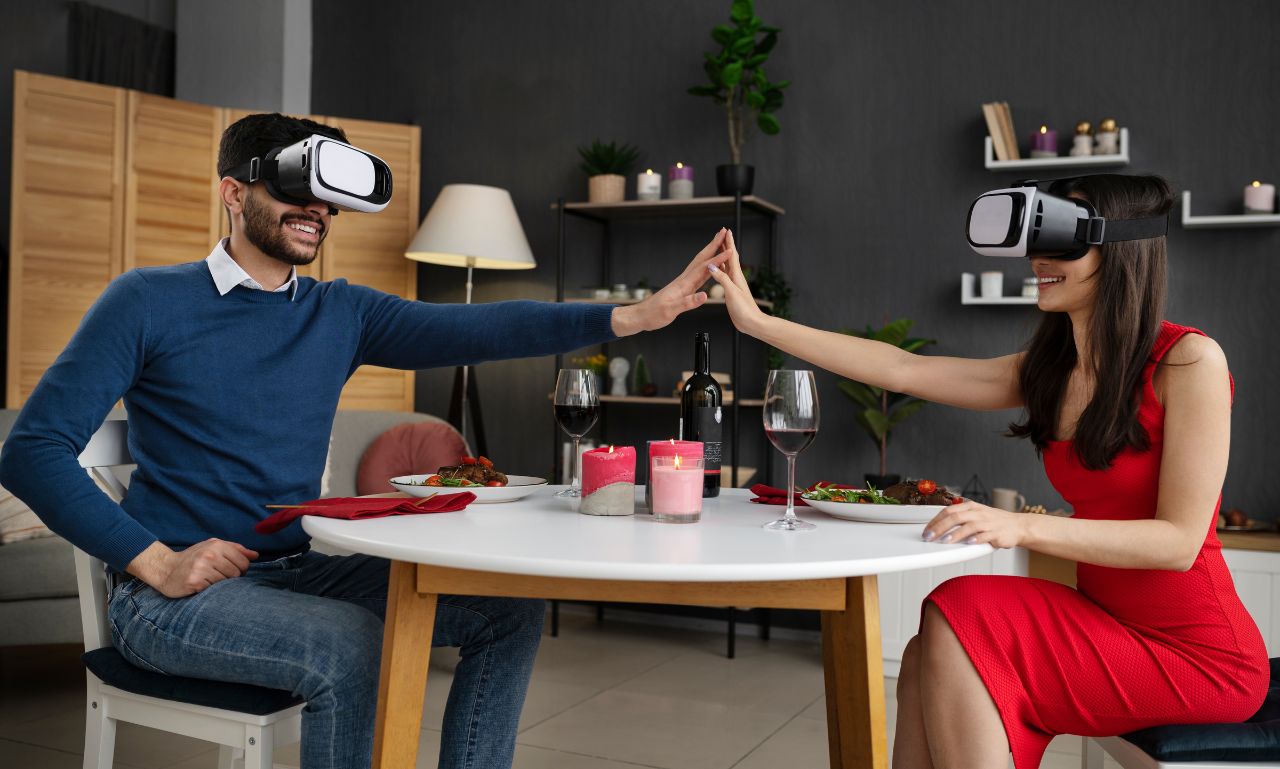
In an era where audiences are increasingly desensitized to traditional screen-based entertainment, a new frontier has emerged that promises to revolutionize how we consume visual media. Enter Spaietacle—a term that is quietly gaining traction among technologists, artists, and experience designers. But what exactly is Spaietacle, and why is it poised to reshape the landscape of live events, museums, and even retail? This concept blends the physicality of space with the grandeur of a spectacle, creating a fully enveloping experience that transcends passive viewing. Unlike a traditional movie or a concert, a Spaietacle invites the audience to step inside the narrative, turning observers into active participants. This article explores the origins, technology, and profound implications of this emerging trend.
Defining the Spaietacle Concept
At its core, a Spaietacle is a fusion of “space” and “spectacle,” a portmanteau that accurately describes its dual nature . While the word “spectacle” derives from the Latin spectaculum, meaning a public show or something worth watching, the Spaietacle adds a critical spatial dimension . It moves the action off the screen and into the room with you. Traditional spectacles, such as fireworks displays or Broadway musicals, are visually impressive but maintain a firm boundary between the stage and the seats . The Spaietacle dissolves that boundary. It transforms entire environments—walls, floors, and ceilings—into dynamic, responsive canvases. This creates a multisensory journey where the line between reality and performance blurs. It is not merely about watching a show; it is about existing inside one.
The Technology Driving the Spaietacle
Creating a true Spaietacle requires a sophisticated blend of cutting-edge technologies. It relies on more than just high-definition screens; it demands an ecosystem of hardware and software that works in harmony.
Projection Mapping and Interactive Sensors
The backbone of most installations is advanced projection mapping . Unlike a standard projector aimed at a flat screen, projection mapping casts images onto irregularly shaped surfaces, turning a brick wall or a sculpted ceiling into a moving picture. However, what truly defines a Spaietacle is interactivity. Using sensors and motion tracking, the environment reacts to the viewer. If you walk through a Spaietacle depicting a forest, the leaves might rustle as you pass, or a path might illuminate directly beneath your feet . This real-time response is facilitated by complex computing systems that process data instantly, ensuring the visual narrative adapts to the audience’s movements, making every visit unique.
Augmented Reality Integration
While large-scale projections dominate physical venues, augmented reality (AR) brings the Spaietacle into more intimate settings . Using AR glasses or even mobile devices, users can see digital elements overlaid onto the real world. This allows for a hybrid experience where a quiet gallery wall transforms into a bustling historical scene, or a retail store window hosts a holographic fashion show. This versatility suggests that the Spaietacle is not confined to purpose-built arenas; it is a flexible concept that can be scaled to fit various budgets and locations.
Core Elements of a Memorable Spaietacle
Not every immersive room qualifies as a Spaietacle. For an event or installation to earn the label, it must usually possess several distinct characteristics. Understanding these elements helps distinguish genuine innovation from simple decoration.
-
Spatial Immersion: The experience must surround the user. Unlike a VR headset that isolates the user, a Spaietacle often encourages shared, social experiences within a physical space .
-
Emotional Resonance: It is not just about flashy lights. A successful Spaietacle tells a story. It uses the immersive environment to evoke specific feelings, whether awe, fear, joy, or contemplation .
-
Participatory Dynamics: The viewer is an active agent. The Spaietacle changes based on interaction, giving the audience a sense of agency often missing in linear media .
These elements combine to create what experts call “active participation,” where the barrier between the viewer and the viewed disappears .
Applications Across Industries
The versatility of the Spaietacle means it is finding applications far beyond the art gallery. Industries ranging from retail to healthcare are exploring how immersive spaces can add value.
In the world of Art and Museums, the static exhibition is being reimagined . Instead of looking at a painting of a starry night, a Spaie-tacle installation allows visitors to walk through a simulation of Van Gogh’s vision, watching the brushstrokes swirl around their bodies. In Live Entertainment, concerts are evolving from simple stage shows to Spaietacle events where the entire venue—including the crowd—becomes part of the light show, with visuals reacting to the volume of the music or the movement of the dancers . Even the Retail sector has taken notice. Brands are using Spaie-tacle environments to create “experiential showrooms” where customers can test hiking boots on a digitally projected mountain trail or visualize furniture in a simulated living room that changes lighting from day to night.
The Future of the Spaietacle
As technology becomes more accessible and costs decrease, the Spaietacle is expected to move from niche art installations to mainstream commercial entertainment . We are likely to see the rise of “Spaietacle theaters” dedicated solely to rotating immersive exhibitions. However, there are challenges. The technical complexity and high setup costs currently limit widespread adoption. Furthermore, designers must be careful to avoid “sensory overload,” ensuring that the experience is awe-inspiring without being overwhelming.
Looking ahead, the integration of artificial intelligence (AI) will likely push the Spaietacle even further . Imagine a Spaietacle that learns your preferences as you walk through it, altering the narrative in real-time to suit your emotional state. As we crave more authentic and engaging forms of entertainment in a digital age, the Spaietacle offers a promising answer—not just a show to watch, but a world to live in, if only for an hour.