
 By Daniel Mercer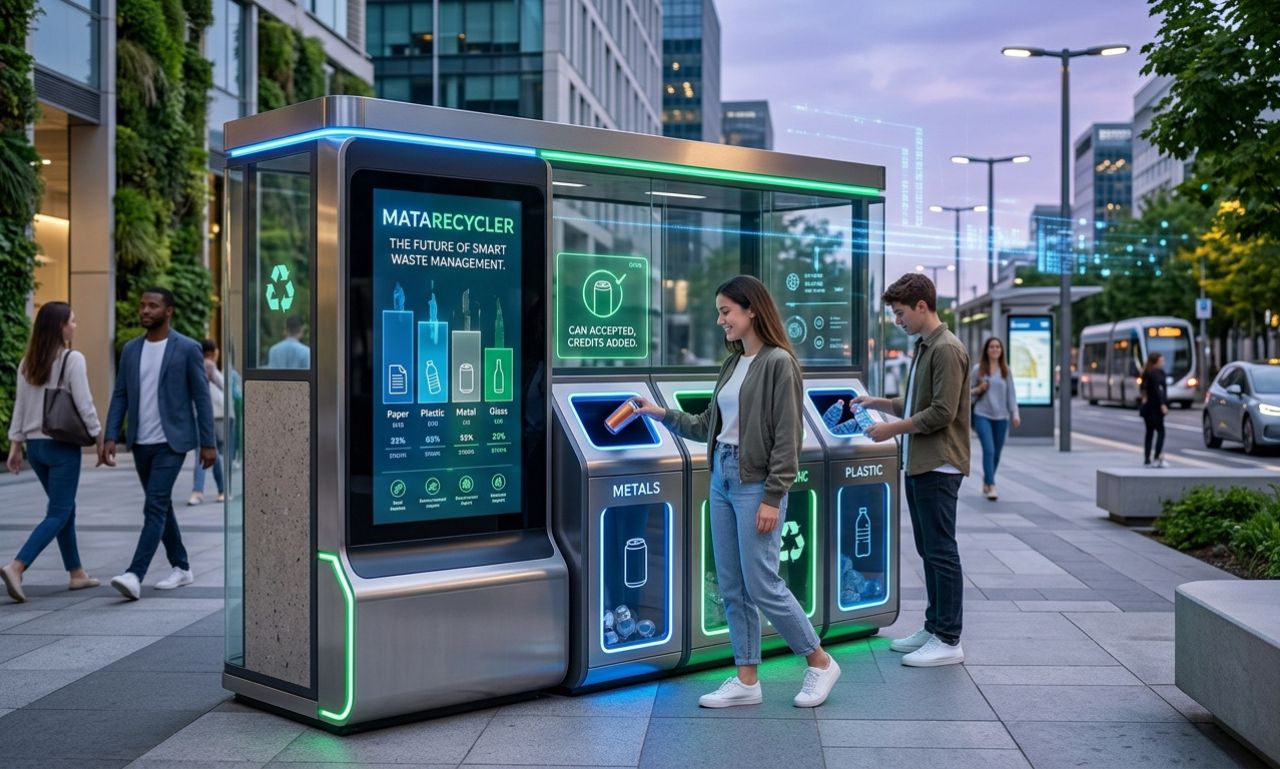
The global waste crisis has reached unprecedented levels, with the World Bank projecting that solid waste generation could climb to nearly 3.9 billion tonnes annually by 2050 . Despite growing environmental awareness, traditional recycling methods continue to fall short, plagued by contamination rates between 17% and 25% in curbside programs across the United States . This is where MataRecycler enters the picture. As a pioneering smart waste management concept, MataRecycler leverages artificial intelligence and Internet of Things (IoT) technology to address the fundamental inefficiencies that have long hindered recycling infrastructure.
The Limitations of Traditional Recycling Systems
Traditional recycling systems are burdened by significant operational challenges. Manual sorting lines are not only labor-intensive but also prone to human error. Human sorters typically achieve accuracy rates of only 85% to 90%, and this performance declines as fatigue sets in and processing volumes increase . Contamination remains the single biggest obstacle in the recycling industry. When non-recyclable items mix with recyclable materials, entire batches can become worthless, often ending up in landfills despite good intentions .
Furthermore, transportation logistics in conventional systems contribute substantially to carbon emissions through fixed collection schedules and long-distance hauling . Many communities also struggle with outdated infrastructure that is ill-equipped to handle modern waste streams. This lack of technological innovation limits effectiveness in addressing environmental challenges, highlighting the urgent need for a smarter, more efficient approach to recycling.
How MataRecycler Technology Works
MataRecycler represents a paradigm shift in waste management through its integration of advanced AI algorithms, IoT sensors, and real-time data analytics. The system operates through a streamlined multi-step process designed to maximize recycling efficiency while minimizing contamination .
When waste is deposited into a MataRecycler smart bin, high-resolution cameras instantly scan the item. The AI then classifies the material—whether plastic, paper, metal, glass, or electronic waste—based on shape, color, and texture. The system automatically routes the item to the correct recycling stream while identifying and flagging any contamination before it can compromise an entire batch .
This automated separation catches mistakes that human eyes typically miss and performs without fatigue or inconsistency. The underlying machine learning engine continuously refines its recognition capabilities, adapting to new packaging shapes and seasonal changes in waste composition. Unlike traditional systems that react to problems, MataRecycler anticipates them through predictive waste management .
The technology also extends to a user-friendly mobile application that guides consumers on proper sorting practices. By scanning items with their smartphones, users can receive step-by-step instructions on how to recycle specific materials and track their environmental impact over time .
Key Benefits of MataRecycler
Superior Sorting Accuracy
Perhaps the most compelling advantage of MataRecycler is its exceptional sorting accuracy. The AI-powered system achieves accuracy rates between 95% and 98%, significantly outperforming human sorters who average only 85% to 90% . In controlled pilot studies, a mid-sized material recovery facility demonstrated the dramatic difference: manual sorting achieved 88% correct classification with a 14% contamination rate, while an AI-assisted line reached 96% accuracy and reduced contamination in outbound bales to just 4% .
Significant Cost Savings
Businesses implementing MataRecycler technology typically report 40% to 60% reductions in landfill disposal costs . IoT fill-level sensors enable dynamic collection routing, which can cut collection truck frequency by 30% to 50%. For cities and organizations facing budget constraints, these savings translate directly into funds available for other community priorities .
Enhanced Sustainability Reporting
MataRecycler logs every sorting decision, providing real-time data on recycling patterns, participation rates, and operational efficiency. This visibility supports environmental, social, and governance (ESG) reporting and helps businesses meet Extended Producer Responsibility requirements being implemented in states like Colorado and Oregon . The system creates a transparent waste management ecosystem where environmental impact becomes measurable and manageable.
Real-World Applications and Success Stories
MataRecycler technology demonstrates remarkable versatility across various sectors. In urban areas, municipalities leverage the system to enhance waste management operations, making cities cleaner and more sustainable through improved sorting and processing . The manufacturing industry uses MataRecycler to streamline material reclamation, reducing costs while minimizing environmental impact .
Construction companies integrate MataRecycler to efficiently recycle concrete and metals, decreasing landfill contributions while promoting circular economy practices . The electronics sector benefits significantly by recovering valuable components from discarded devices, reducing the need for environmentally destructive mining operations .
One notable success story comes from a small town that faced chronic littering issues. After implementing MataRecycler technology, the community witnessed a 50% decrease in waste within just six months. Residents took renewed pride in their environment, and schools introduced educational programs around sustainable practices, creating lasting behavioral change . A mid-sized manufacturing firm reduced its landfill contributions by over 60% within six months of adopting the system .
The Role of AI in Recycling’s Future
MataRecycler demonstrates that AI can dramatically improve recycling accuracy and cut operational costs. However, the technology alone cannot solve the global waste crisis. Success also requires public participation, adequate investment, and supportive policies . Consumer engagement through user-friendly applications, transparent environmental tracking, and educational components all play crucial roles in the broader solution.
The self-improving nature of AI-driven systems means that MataRecycler becomes more effective over time. As the machine learning engine processes more data, recognition accuracy improves, adapting to new materials and local recycling habits . This continuous learning capability sets the technology apart from traditional recycling methods that rely on static infrastructure and manual processes.
Conclusion
MataRecycler represents a significant advancement in smart waste management, offering a compelling solution to the persistent challenges that have constrained traditional recycling infrastructure. By combining AI-powered sorting, IoT-enabled tracking, and real-time data analytics, MataRecycler dramatically improves sorting accuracy while reducing contamination rates and operational costs.
As communities and businesses increasingly recognize the financial and environmental imperative of sustainable waste management, MataRecycler technology stands poised to become standard practice worldwide. The evidence from successful implementations across various sectors demonstrates that this innovative approach delivers tangible results: cleaner materials, lower costs, better data, and measurable environmental benefits . While AI alone cannot solve the global waste crisis, MataRecycler provides the technological foundation upon which sustainable, circular-economy infrastructure can be built—transforming how we view and handle waste for generations to come.